
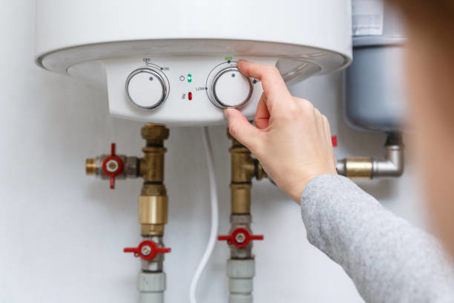
What type of water heater is most efficient?
Heat pump water heaters and tankless water heaters are the most energy-efficient options available today. Heat pump models are the most efficient overall because they transfer heat from the air to heat water, rather than generating heat directly. Tankless water heaters are also highly efficient since they only heat water when needed, eliminating standby energy loss. For homeowners in Georgetown, Texas the most efficient choice depends on hot water usage, available space, and budget. A licensed plumber can help determine the best option for your home. Call Plumbpros to get started.
Which water heater offers the highest efficiency?
Heat pump water heaters are generally among the most efficient options for residential water heating. Instead of using electricity primarily to generate heat directly, these systems capture heat from the surrounding air and transfer it into the water.
This approach can use considerably less electricity than a conventional electric resistance water heater. The system operates somewhat like a refrigerator in reverse, moving existing heat rather than creating all of the heat it needs from electricity.
For Georgetown, Texas homeowners, the warm climate can make heat pump technology particularly practical when the unit is installed in an appropriate location. However, homeowners also need to consider installation space, ventilation, household hot water demand, and the initial cost of the equipment.
The most efficient system on paper is not automatically the best system for every property. A professional evaluation can help determine whether a home's layout and hot water needs are compatible with a heat pump water heater.
How do heat pump water heaters save energy?
A conventional electric tank water heater uses electrical resistance elements to heat the water stored inside the tank. A heat pump water heater takes a different approach by using electricity to operate a compressor and transfer heat from the surrounding air into the tank.
Because the system moves existing heat, it can require substantially less electricity to provide the same amount of hot water under suitable conditions.
Heat pump water heaters still store heated water in a tank, so selecting the correct tank capacity is important. A system that is too small may struggle with a household's peak hot water demand, while an appropriately sized unit can provide efficient and reliable performance.
Installation location also matters. Heat pump units need adequate surrounding air and space to operate effectively. Garages, utility rooms, and other suitable areas may provide the conditions these systems need.
Are tankless water heaters energy efficient?
Tankless water heaters can also provide excellent energy efficiency. Rather than keeping a tank of water hot throughout the day and night, a tankless system begins heating water when a hot water fixture is opened.
This on-demand operation eliminates much of the standby energy loss associated with traditional storage tanks. Energy is used when hot water is needed instead of continuously maintaining a stored supply at a set temperature.
Tankless systems also have a compact design, which can be useful in homes where space is limited. They can provide a continuous supply of hot water when properly sized for the home's simultaneous demand.
However, efficiency depends partly on household usage. A plumber should consider the number of fixtures, expected flow rates, fuel or electrical capacity, and peak hot water demand before recommending a tankless system.
How do traditional tank water heaters compare?
Traditional tank water heaters remain common because they are familiar, dependable, and often less expensive to install initially than some higher-efficiency alternatives.
Standard electric tank models use heating elements inside the tank, while gas models use a burner to heat the stored water. Because these systems maintain a reservoir of hot water, some energy can be lost while the water sits in the tank.
Modern storage water heaters can reduce these losses through improved insulation and more efficient heating components. High-efficiency gas models may also incorporate technology designed to capture more heat from the combustion process.
For homeowners who prioritize a lower initial installation cost or whose property is not suitable for a heat pump or tankless system, a modern high-efficiency tank water heater can still be a practical option.
What factors determine the most efficient water heater for a home?
Energy efficiency is important, but it should be considered alongside the actual needs of the household. A water heater must provide enough hot water during periods of peak demand while working with the home's existing infrastructure.
Household size is one important factor. A home with several occupants taking showers, running appliances, and using multiple hot water fixtures may require greater capacity than a smaller household.
Available installation space also matters. Heat pump water heaters generally need sufficient surrounding air, while tankless units require appropriate gas or electrical capacity depending on the model.
The home's existing utilities can influence installation costs as well. Switching from one fuel source or water heater technology to another may require electrical, gas, venting, or plumbing modifications.
A professional evaluation considers these factors together rather than selecting a system based on efficiency ratings alone.
Does Georgetown's climate affect water heater efficiency?
Local climate can influence how certain water heaters perform. Heat pump water heaters draw heat from the surrounding air, so warmer ambient conditions can support efficient operation.
This can make heat pump technology worth considering for homes in Georgetown, Texas, provided the unit can be installed in a location that meets its operating requirements.
The installation environment still matters. A heat pump water heater can cool the surrounding area as it extracts heat, and the system requires adequate airflow. Placing the equipment in an unsuitable enclosed space may affect performance.
A plumber can evaluate possible installation locations and determine whether the home's conditions are appropriate for this type of system.
Does water quality affect water heater efficiency?
Water quality can influence the long-term performance of any water heater. Minerals in hard water can gradually accumulate inside tanks, heating components, heat exchangers, and plumbing connections.
As mineral deposits build up, they can interfere with heat transfer and water flow. This can reduce performance and place additional strain on equipment.
Traditional tank water heaters may require periodic flushing to remove accumulated sediment. Tankless systems can also require descaling to remove mineral deposits from internal waterways and the heat exchanger.
Even a highly efficient water heater needs regular maintenance to continue operating as intended. Following the manufacturer's maintenance recommendations and addressing mineral buildup can help protect the system's performance.
Is the most efficient water heater always the best choice?
The highest-efficiency model is not necessarily the best fit for every household. Purchase price, installation requirements, available space, hot water demand, maintenance needs, and existing utilities should all be considered.
A heat pump water heater may offer excellent energy efficiency but require more installation space and a higher initial investment. A tankless system can eliminate standby losses but may require upgrades to gas or electrical service depending on the home.
A high-efficiency storage tank may make more sense when homeowners want a straightforward replacement that works with existing plumbing and utility connections.
Comparing both upfront and long-term costs provides a more complete picture. A licensed plumber can evaluate the home and recommend options that balance efficiency, installation requirements, and reliable hot water delivery.
FAQ
What type of water heater is most efficient?
Heat pump water heaters and tankless water heaters are the most energy-efficient options available today. Heat pump models are the most efficient overall because they transfer heat from the air to heat water, rather than generating heat directly. Tankless water heaters are also highly efficient since they only heat water when needed, eliminating standby energy loss. For homeowners in Georgetown, Texas the most efficient choice depends on hot water usage, available space, and budget. A licensed plumber can help determine the best option for your home. Call Plumbpros to get started.
Are heat pump water heaters more efficient than traditional electric water heaters?
Heat pump water heaters can use substantially less electricity than conventional electric resistance models because they transfer existing heat from the surrounding air instead of relying primarily on electrical resistance to generate heat.
Do tankless water heaters use less energy than tank water heaters?
Tankless water heaters can reduce energy waste because they heat water on demand instead of continuously maintaining a stored supply of hot water. Actual energy savings depend on household usage, system efficiency, fuel source, and proper sizing.
How do I choose between a heat pump and tankless water heater?
Consider household hot water demand, available installation space, existing gas or electrical capacity, upfront cost, and long-term energy use. A licensed plumber can evaluate these factors and determine which system is better suited to the home.
FAQ: What type of water heater is most efficient?
Conclusion
Heat pump and tankless water heaters are both highly efficient options, but they achieve their efficiency in different ways. Heat pump models transfer heat from the surrounding air, while tankless systems reduce standby energy loss by heating water only when it is needed.