
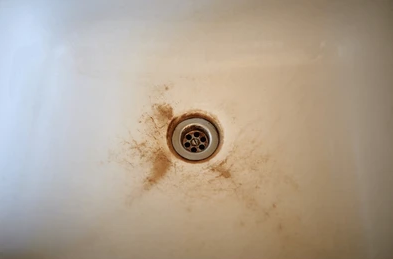
Many homeowners notice sticky brown residue around their sink drain along with unpleasant odors or slow draining water. This buildup usually forms when grease, soap residue, food particles, bacteria, and other organic materials stick to the inner walls of plumbing pipes.
Understanding what causes this buildup and how to remove it safely can help keep your plumbing system working properly.
What Causes Brown Residue in a Sink Drain
Brown residue forms when everyday substances accumulate inside pipes. In kitchen sinks, grease and food particles are the most common contributors. Even when grease is rinsed with hot water, it cools inside the pipe and sticks to the pipe walls.
In bathroom sinks, buildup often includes soap residue, toothpaste, hair, and skin oils. When these materials combine with bacteria and mineral deposits from hard water, they create the sticky brown film many homeowners see near the drain opening.
Signs the Buildup Is Becoming a Problem
Brown residue may begin as a thin film, but it can lead to larger plumbing problems if ignored.
Common warning signs include:
Slow draining water
Unpleasant odors from the drain
Sticky residue around the drain opening
Recurring minor clogs
Gurgling sounds in the pipes
These symptoms often indicate buildup deeper inside the pipe.
Cleaning Light Buildup
For minor buildup near the drain opening, a baking soda and vinegar mixture can sometimes help loosen residue.
This method usually involves:
Pouring baking soda into the drain
Adding vinegar to create a reaction
Allowing the mixture to sit briefly
Flushing the drain with hot water
This reaction may help break apart soft organic residue and reduce odors.
Limitations of Home Cleaning Methods
Although baking soda and vinegar may help with light buildup, it does not fully clean the interior of the pipe. Grease, mineral scale, and compacted debris often remain attached to the pipe walls.
When buildup returns quickly after cleaning, it usually indicates deeper residue inside the plumbing system.
Professional Drain Cleaning
Professional drain cleaning removes buildup from the entire interior surface of the pipe. Methods such as drain snaking or hydro jetting can remove grease, sludge, soap residue, and mineral deposits that basic cleaning cannot reach.
Thorough cleaning helps restore proper water flow and reduce recurring clogs.
Preventing Brown Drain Buildup
Several simple habits can help reduce buildup in your sink drains:
Avoid pouring grease or cooking oils into the drain
Use drain strainers to catch food particles and hair
Run hot water after using the sink
Clean drains periodically using safe maintenance methods
Schedule professional cleaning if buildup becomes frequent
These steps can help maintain proper drainage and extend the life of your plumbing system.
Read FAQ: What Is The Best Way To Get Rid Of Brown Residue In A Sink Drain?
If brown residue keeps returning or your sink drain is draining slowly, PlumbPros can inspect your plumbing system and provide professional drain cleaning in Georgetown, Texas.