
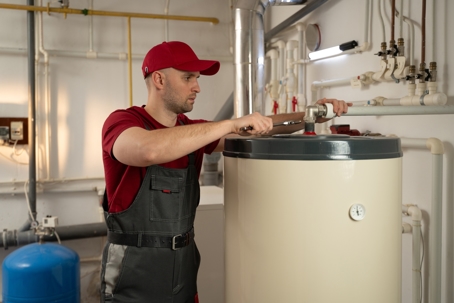
Is it cheaper to repair or replace a water heater? This is a question nearly every Georgetown, TX homeowner faces at some point. Water heaters work quietly in the background until something goes wrong. When they stop producing hot water, begin leaking, or make unusual noises, homeowners must decide whether to invest in a repair or commit to a full replacement. The decision depends on several key factors, including the age of the unit, the cost of the repair, the history of past issues, and the efficiency of the existing water heater.
Repairing a water heater is often less expensive in the moment, which makes it appealing for quick fixes. However, replacement can be more cost effective when the system is older or when repairs have become frequent. Understanding the pros and cons of each option can help you make the smart choice for your home and budget.
Below is a detailed guide to help you determine whether repairing or replacing your water heater is the most cost effective option.
Age of the Water Heater Matters Most
One of the biggest factors in deciding between repair and replacement is the age of the water heater. Most traditional tank style water heaters last eight to twelve years. Tankless models can last longer, but even they eventually wear down.
If your water heater is:
Less than eight years old, repair is often the more economical choice
Between eight and twelve years old, either option may be reasonable depending on the issue
More than twelve years old, replacement is usually the better investment
Georgetown homes vary widely in age, so some homeowners may still have older units that struggle with efficiency. As water heaters age, sediment buildup and corrosion increase, which raises operating costs and lowers performance. Repairing these older systems often provides only temporary relief.
Consider the Cost of the Repair
A general rule used in the plumbing industry is known as the fifty percent rule. If the cost of the repair is close to half the price of a new water heater, replacement is usually recommended. For example, if the repair cost is several hundred dollars and a new unit is only slightly more, the long term value of a replacement becomes clear.
Common repairs that may be worth completing include:
Replacing a thermostat
Swapping out a heating element
Fixing a pressure relief valve
Flushing sediment
These repairs are often affordable and can extend the life of a younger system.
More expensive repairs that may signal it is time for replacement include:
Tank leaks
Severe corrosion
Repeated electrical failures
Broken or failing gas control valves
If the repair does not significantly extend the lifespan of the water heater, replacement becomes the smarter financial choice.
Efficiency and Energy Costs
Older water heaters are often far less efficient than newer models. Even if an older unit can be repaired, the ongoing energy costs may outweigh the benefit of keeping it. Newer water heaters are designed with improved insulation, more efficient heating elements, and better temperature control. These improvements reduce utility bills and provide more reliable hot water.
For Georgetown households with high hot water demand, upgrading to a high efficiency tank or tankless system can offer long term savings. Even though the initial installation cost is higher, the improved energy efficiency makes replacement a financially sound option for many families.
Frequency of Past Repairs
If your water heater has required multiple repairs over the past few years, that is a sign that the system is nearing the end of its lifespan. Frequent repairs often indicate hidden problems such as internal corrosion or worn components. Instead of spending money repeatedly on short term fixes, investing in a new water heater can be more cost effective.
A good question to ask is whether you feel confident in the reliability of your current unit. If you expect that another repair will be needed soon, replacement is usually the better choice.
Safety Concerns Should Not Be Ignored
Water heaters can develop safety issues when they age. Gas water heaters may develop problems with burners or venting. Electric models may have wiring issues or overheating risks. Leaking tanks can cause water damage that is much more expensive than replacing the unit.
If a plumber identifies a safety related problem, replacement may be the only reasonable choice. Protecting your home and family should always be a priority when evaluating repair versus replacement.
A Professional Evaluation Helps You Choose Wisely
A licensed plumber can inspect the water heater, assess the condition of the tank and components, and provide a cost comparison between repair and replacement. In Georgetown, the mineral content of the water can accelerate sediment buildup, which makes professional guidance especially important.
A thorough evaluation helps ensure that you choose the most cost effective option for your home. The plumber can also recommend models that offer better efficiency and long term savings.
Final Thoughts
Repairing a water heater is usually cheaper upfront, but replacement can be the better long term investment when the system is older or experiencing frequent issues. Most water heaters in Georgetown, TX last eight to twelve years. Once they reach that age, repairs often become less reliable. If the repair cost approaches half the cost of a new unit, replacement is generally the wiser financial decision.
Whether you choose repair or replacement, the key is making an informed choice based on the system’s age, repair history, and overall condition.
Call PlumbPros to get started.
Read the FAQ
Is it cheaper to repair or replace a water heater?