
Can baby wipes be flushed down the toilet?
No, baby wipes should not be flushed down the toilet, including products labeled flushable. Unlike toilet paper, wipes may remain intact as they travel through plumbing and sewer systems. They can collect around pipe joints, roots, and existing obstructions, contributing to difficult drain blockages and sewer backups. The safest disposal method is placing used wipes in the trash.
Why Should Baby Wipes Never Be Flushed?
Baby wipes are designed to remain durable while being used for cleaning.
That durability is useful for their intended purpose, but it can create problems when wipes enter household plumbing.
Toilet paper is manufactured to break apart relatively quickly when exposed to water and movement.
Baby wipes often retain their structure much longer.
As a result, a wipe may travel through the toilet without immediately causing a blockage but still create problems farther along the drain line.
This distinction explains why flushing a wipe successfully does not mean it is safe for the plumbing system.
The toilet bowl is only the beginning of a much longer drainage path.
Wastewater must travel through branch drains, the building sewer, and eventually the public sewer system or another approved wastewater treatment arrangement.
Materials that remain intact can encounter obstacles anywhere along that route.
How Wipes Contribute to Drain Blockages
A wipe moving through a drain may become caught on a rough pipe joint, root intrusion, or an existing obstruction.
Once it becomes trapped, additional material can collect around it.
Other wipes, toilet paper, and waste may accumulate, gradually restricting the flow of wastewater.
This can lead to slower drainage, recurring clogs, or a more serious sewer backup.
The risk may be greater in drain lines that already have defects or partial obstructions.
For example, a sewer line with root intrusion can catch materials that might otherwise pass through a clear section of pipe.
Flushing wipes adds another potential source of blockage.
Are Flushable Wipes Actually Safe for Plumbing?
A product labeled flushable should not automatically be considered safe for every household plumbing system.
The term can create confusion because the ability to pass through a toilet is different from the ability to break apart during wastewater transport.
A wipe may disappear from the toilet bowl while remaining substantially intact farther down the drain.
The Federal Trade Commission has addressed the need for manufacturers to substantiate certain flushability claims through appropriate testing.
For homeowners, the practical recommendation remains straightforward.
Only human waste and toilet paper should be flushed.
Baby wipes, cleaning wipes, disinfecting wipes, and similar products belong in the trash.
This approach reduces the amount of durable material entering the drainage system.
What About Wipes Used Only Occasionally?
Occasional flushing does not eliminate the risk.
A single wipe may pass through without an obvious problem, but it can also become trapped in a vulnerable section of plumbing.
Repeated flushing increases the amount of material moving through the sewer line.
The absence of an immediate clog should not be treated as proof that the practice is harmless.
A blockage may develop gradually before symptoms appear inside the home.
What Happens When Baby Wipes Clog a Sewer Line?
A wipe-related blockage may begin with drainage problems that seem relatively minor.
For example, the toilet may flush more slowly than usual.
As the obstruction grows, wastewater may struggle to move through the affected pipe.
Possible warning signs include:
Toilets that frequently clog or drain slowly.
Gurgling sounds from nearby drains.
Wastewater backing up into lower plumbing fixtures.
Multiple fixtures experiencing drainage problems.
Recurring blockages after temporary clearing.
The specific symptoms depend on where the obstruction develops.
A clog close to the toilet may affect only that fixture.
A blockage farther down the main sewer line may affect several fixtures throughout the home.
When multiple drains show symptoms, a larger drainage problem should be considered.
How Are Wipe-Related Clogs Removed?
Professional drain cleaning can remove obstructions that cannot be cleared through ordinary fixture maintenance.
The appropriate technique depends on the pipe condition and blockage location.
A plumber may use drain-cleaning equipment to clear the obstruction.
A sewer camera inspection can help identify recurring problems, such as root intrusion, damaged pipe sections, or other conditions that allow debris to accumulate.
Hydro jetting may be appropriate for certain drainage systems, depending on the pipe material and condition.
The goal is to restore flow while also identifying whether an underlying pipe problem contributed to the blockage.
Baby Wipes and Sewer Maintenance in Georgetown, Texas
In Georgetown, Texas, homeowners should understand the distinction between public sewer infrastructure and private sewer lines.
The homeowner is generally responsible for the sewer line on the private side of the property.
When wipes create a blockage in that section, resolving the problem can become the homeowner's responsibility.
This makes proper disposal an important part of household plumbing maintenance.
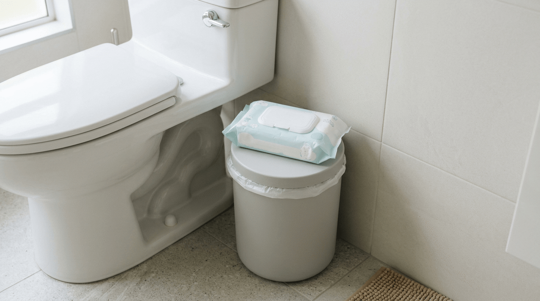
Families that regularly use baby wipes can reduce the temptation to flush them by keeping a lined trash container near the toilet.
The same approach applies to personal cleaning wipes and other disposable products that should not enter the drainage system.
For Georgetown households, a simple disposal habit can help avoid introducing unnecessary material into private sewer lines.
Common Misconception: If a Wipe Flushes, It Must Be Safe
One common misconception is that anything passing through the toilet has safely entered the sewer system.
In reality, a successful flush only demonstrates that the item passed through the fixture.
It does not establish that the material will break apart or travel through the entire drainage system without becoming trapped.
The safer rule is to flush only toilet paper and human waste.
FAQ
Are wipes labeled flushable safe for toilets?
They are not necessarily safe for every plumbing system. Wipes may remain intact and contribute to blockages even when they pass through the toilet.
Can one baby wipe clog a toilet?
Yes, a single wipe can contribute to a blockage, particularly when a drain already contains an obstruction or damaged section.
What should I do if I accidentally flush a baby wipe?
Avoid flushing additional wipes. If the toilet drains normally, monitor for problems. Repeated clogs or slow drainage may require professional inspection.
How do plumbers remove baby wipes from sewer lines?
Plumbers may use appropriate drain-cleaning equipment to remove obstructions. Camera inspections can help locate recurring blockages and identify underlying pipe problems.
Can baby wipes be flushed down the toilet?
No. Baby wipes should go in the trash, even when packaging describes them as flushable. Unlike toilet paper, wipes may remain intact and contribute to drain or sewer blockages. In Georgetown, Texas, homeowners can be responsible for clearing clogs in their private sewer lines. Proper disposal helps reduce plumbing problems.
Conclusion
Baby wipes should never be flushed down the toilet because they do not break apart like toilet paper and may contribute to drain and sewer blockages. Even wipes marketed as flushable can create problems when they encounter existing pipe obstructions.
PlumbPros provides drain cleaning and sewer camera inspection services for homeowners in Georgetown, Texas. If your plumbing is experiencing recurring clogs or signs of a sewer blockage, professional evaluation can help identify and resolve the problem.