
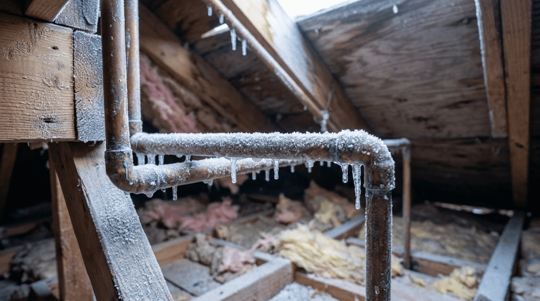
Can your pipes still freeze if your water is turned off?
Yes. Turning off the main water supply does not prevent water remaining inside pipes from freezing. Ice can expand and damage exposed plumbing, particularly in attics, exterior walls, and outdoor fixtures. In Georgetown, Texas, insulating vulnerable pipes and properly draining lines when appropriate offer additional protection during freezing weather.
Why Can Pipes Freeze After the Water Is Shut Off?
Closing the main water shutoff valve stops additional water from entering the home's plumbing system.
However, it does not automatically empty the pipes.
Water remains inside supply lines, fittings, valves, and plumbing fixtures unless it is removed through an appropriate draining procedure.
When temperatures surrounding those components fall sufficiently, the remaining water can freeze.
As ice forms, it can create pressure inside a confined section of plumbing.
That pressure may cause a pipe or fitting to crack or separate.
The damage may not become obvious immediately.
Sometimes, a frozen pipe prevents water from flowing, and the resulting leak only becomes visible after the ice melts and water pressure returns.
This is why shutting off the main valve is not equivalent to winterizing a plumbing system.
The valve provides a way to isolate the supply, but additional protection may still be necessary.
Which Pipes Are Most Vulnerable?
Pipes exposed to cold air or located in poorly insulated spaces generally face greater freezing risks.
Common vulnerable locations include:
Attics without adequate protection.
Exterior walls containing water supply lines.
Outdoor hose bibs and exposed piping.
Garages and other unheated spaces.
Plumbing near openings that allow cold air to enter.
A pipe inside a heated living area may remain protected while another pipe serving the same fixture freezes in an exposed location.
The temperature around the pipe matters more than whether the main water valve is open or closed.
Does Turning Off the Water Help Prevent Burst-Pipe Damage?
Turning off the main supply can reduce the amount of water released if a pipe breaks.
When the valve is closed, the municipal supply is no longer continuously feeding the home's plumbing system.
That distinction is important because a burst pipe can release substantial water when supply pressure is restored.
However, a closed valve does not remove the physical conditions that cause freezing.
Water already inside the pipe may still turn to ice.
A pipe can therefore sustain damage even while the main valve remains closed.
Homeowners should also understand that reopening the water supply after a freeze can reveal previously hidden damage.
If a pipe has cracked, pressurizing the system may allow water to escape.
For this reason, suspected frozen or damaged plumbing should be evaluated carefully before normal use resumes.
Can Draining the Pipes Make a Difference?
Properly draining vulnerable water lines can reduce the amount of water available to freeze.
However, draining a residential plumbing system is not always as simple as opening one faucet.
Pipe layouts may contain low sections where water remains trapped.
Water heaters, appliances, valves, and specialized plumbing components may also require separate procedures.
Improper draining can create additional problems, particularly when equipment is not handled according to its operating requirements.
If a property will be vacant during freezing weather, a plumber can explain the appropriate winterization procedure.
How Can Homeowners Protect Pipes During Freezing Weather?
Several preventive measures can reduce exposure to freezing temperatures.
Insulate Exposed Plumbing
Foam pipe insulation can help slow heat loss from exposed water lines.
Outdoor pipes and other vulnerable sections should receive attention before freezing conditions arrive.
Insulation provides protection, but it does not generate heat. Extended exposure to sufficiently low temperatures can still cause freezing.
Protect Outdoor Faucets
Outdoor hose connections are particularly vulnerable because they are exposed to cold air.
Removing attached hoses and using suitable faucet covers can help reduce exposure.
The appropriate preparation depends on the faucet design and plumbing arrangement.
Maintain Indoor Heat
Keeping the home adequately heated helps protect pipes located within conditioned spaces.
Opening cabinet doors beneath sinks on exterior walls can allow warmer indoor air to circulate around exposed supply lines.
This measure may be useful when those cabinets otherwise restrict warm airflow.
Know the Main Shutoff Location
Every homeowner should know how to locate and operate the main water shutoff valve.
If a pipe breaks, promptly isolating the supply can help limit additional water damage.
The shutoff should be accessible before an emergency occurs.
Freezing Pipe Risks in Georgetown, Texas
Freezing temperatures are not an everyday condition in Georgetown, Texas, but winter cold spells can create plumbing problems.
Homes in the area may have water lines running through attics, exterior walls, garages, or outdoor spaces.
These locations can experience significantly colder conditions than heated living areas.
Homeowners preparing for freezing weather should pay attention to exposed piping, outdoor fixtures, and areas where cold air can reach plumbing.
For properties that will be unoccupied, planning is especially important.
Turning off the main water supply may help limit damage from a break, but it should not be treated as the only winterization measure.
Appropriate drainage and insulation can provide additional protection.
Common Misconception: A Closed Main Valve Prevents Freezing
A common misconception is that shutting off the water prevents ice from forming inside pipes.
In reality, the valve controls incoming water, not the temperature of water already inside the system.
Even an isolated pipe can freeze if enough water remains and surrounding temperatures become sufficiently cold.
Protection requires attention to temperature exposure and the water remaining in vulnerable sections.
FAQ
Can pipes burst when the main water valve is closed?
Yes. Water remaining inside the pipes can freeze and create damaging pressure even when the main supply is shut off.
Will turning off the water prevent a frozen pipe from leaking?
Not necessarily. A damaged pipe may leak when ice melts or when water pressure returns, although shutting off the supply can limit additional flooding.
Should I drain my pipes before leaving during a freeze?
Proper draining may reduce freezing risks, but the correct procedure depends on the plumbing system. Professional guidance can help prevent incomplete or improper winterization.
Which household pipes are most likely to freeze?
Pipes in attics, exterior walls, garages, and exposed outdoor locations are particularly vulnerable when freezing temperatures persist.
Can your pipes still freeze if your water is turned off?
Yes. Turning off the main water supply does not prevent water remaining inside pipes from freezing. Ice can expand and damage exposed plumbing, particularly in attics, exterior walls, and outdoor fixtures. In Georgetown, Texas, insulating vulnerable pipes and properly draining lines when appropriate offer additional protection during freezing weather.
Conclusion
Pipes can freeze even when the main water supply is turned off because water remains inside the plumbing system. A closed valve can limit incoming water if a pipe breaks, but insulation, adequate heating, and proper drainage provide additional protection against freezing.