
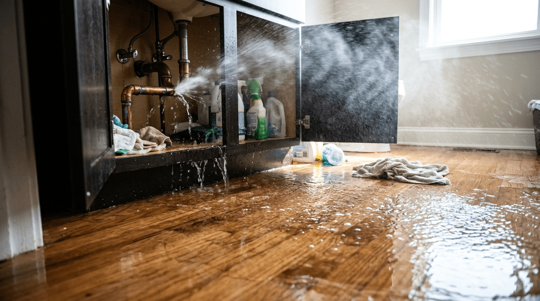
Is a burst pipe considered an emergency?
Yes, a burst pipe is a plumbing emergency because escaping water can quickly damage floors, walls, and electrical systems. Shut off the main water supply immediately and contact a licensed plumber. In Austin, Texas, prompt repairs and drying help limit water damage and reduce the risk of moisture-related problems.
Why Is a Burst Pipe a Plumbing Emergency?
A burst pipe can release a substantial amount of water into a home, depending on the pipe's size, location, and available water pressure. Unlike a small drip, a rupture can allow water to spread rapidly into surrounding areas.
The resulting damage may affect flooring, drywall, insulation, cabinetry, and personal belongings. When water enters concealed spaces, the full extent of the damage may not be immediately visible.
A pipe in an attic can allow water to enter ceilings and the rooms below. Water near electrical outlets, appliances, or wiring creates an additional safety concern.
The severity of a burst pipe depends partly on how quickly the water supply can be stopped. Even when the rupture is relatively small, continued leakage can cause extensive damage if the plumbing remains pressurized.
This is why a burst pipe requires immediate attention rather than routine scheduling.
What Should You Do Immediately After a Pipe Burst?
The first priority is stopping the flow of water.
Locate the home's main water shutoff valve and turn it off.
After stopping the water, take the following precautions:
- Keep people away from standing water near electrical equipment.
- Avoid operating wet outlets, switches, or appliances.
- Contact a licensed plumber to locate and repair the damaged pipe.
- Move unaffected belongings away from wet areas when safe.
- Arrange appropriate water removal and drying.
- Document visible damage for insurance purposes when relevant.
Do not enter standing water that may be electrically energized.
Water damage restoration may also be necessary, particularly when moisture has entered building materials.
How Quickly Can Water Damage Become a Problem?
Water can spread through porous building materials and reach areas that are difficult to inspect. Drywall, insulation, wood, and some flooring materials can absorb moisture.
This guidance emphasizes the importance of addressing both the plumbing failure and the resulting moisture. Repairing the pipe alone may not be sufficient if water has entered walls or flooring.
A restoration professional may need to evaluate affected materials and determine whether specialized drying or removal is necessary.
The amount of damage depends on several factors:
- How long water escaped before the supply was shut off.
- The location of the rupture.
- The volume of escaping water.
- The materials are exposed to moisture.
- Whether water reached concealed spaces.
- How quickly drying begins.
A burst pipe discovered immediately may cause less damage than one that leaks unnoticed for several hours. However, the absence of obvious flooding does not rule out hidden moisture.
Why Do Pipes Burst During Freezing Weather?
Freezing temperatures are one possible cause of burst plumbing. When water freezes inside a pipe, it can create an ice blockage. As pressure builds within the plumbing, the pipe may crack or rupture.
The resulting leak may not become apparent until the ice melts and water begins flowing again. Pipes in exterior walls, garages, attics, and other poorly protected locations can be particularly vulnerable.
Freezing is not the only cause of pipe failures. Corrosion, aging materials, excessive pressure, and physical damage can also contribute to ruptures.
Determining the underlying cause is important because replacing the damaged section may not resolve a broader plumbing problem. A professional inspection can help identify whether the failure is isolated or related to conditions affecting other pipes.
Burst Pipe Emergencies in Austin, Texas
Homeowners in Austin, Texas, should know the location of their main water shutoff valve before an emergency occurs. Homeowners in nearby Pflugerville may face similar plumbing considerations.
Pipes in exposed or poorly insulated locations deserve attention before cold conditions arrive.
Insulating vulnerable plumbing, maintaining indoor heating, and sealing openings that admit cold air can reduce freezing risks.
Regular observation can also help homeowners identify early signs of plumbing problems. Unexplained moisture, recurring leaks, and unusual changes in water pressure may indicate conditions that warrant professional inspection.
Common Myth: A Burst Pipe Can Wait if the Water Stops Flowing
Closing the valve prevents continued leakage, but the damaged pipe still requires repair. Water that escaped before the shutoff may also remain trapped beneath flooring or inside walls.
Reopening the water supply before repairs are completed can restart the leak. Professional evaluation helps establish what needs to be repaired and whether the surrounding area requires additional attention.
FAQ
Should I turn off the water when a pipe bursts?
Yes.
Can a burst pipe cause electrical hazards?
Yes.
Can a burst pipe cause mold?
Yes.
Will homeowners insurance cover a burst pipe?
Coverage depends on the policy, cause of the rupture, and circumstances.
Is a burst pipe considered an emergency?
Yes, a burst pipe is a plumbing emergency because escaping water can quickly damage floors, walls, and electrical systems. Shut off the main water supply immediately and contact a licensed plumber. In Austin, Texas, prompt repairs and drying help limit water damage and reduce the risk of moisture-related problems.
Conclusion
A burst pipe is an emergency because escaping water can damage a home quickly and create additional safety hazards.
PlumbPros provides emergency plumbing services in Austin, Texas.