
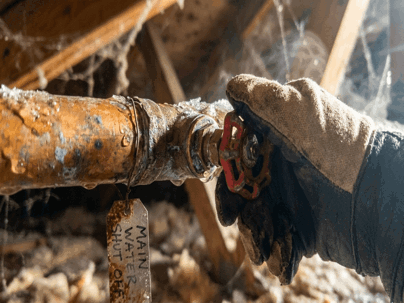
Will frozen pipes unfreeze on their own?
Yes, frozen pipes can thaw on their own as temperatures rise, but waiting is risky because a pipe may have cracked while frozen and begin leaking once water starts flowing again. In Austin, Texas, shut off the water first, use gentle heat on accessible frozen sections, and contact a licensed plumber if the pipe will not thaw safely.
What happens when a frozen pipe begins to thaw?
A frozen pipe is blocked by ice, so little or no water may come from the affected fixture. As the surrounding temperature rises, that ice can melt and normal flow may return. The problem is that thawing does not prove the pipe is undamaged. Freezing water expands, and that stress can crack or split the pipe. A leak may be difficult to notice while the line is still frozen because the ice is limiting water movement. Once the ice melts, water can escape through the damaged section.
That is why the safest response is not simply to wait for warmer weather. If you suspect a frozen pipe, turn off the water at the shutoff valve before thawing it. Open a faucet near the frozen section so water and pressure have a path out as the ice melts. After flow returns, inspect the area for dripping, moisture, or other signs that the pipe was damaged.
How should you safely thaw a frozen pipe?
Use gentle, controlled heat on a frozen section that you can reach. A hair dryer, electric heating pad, or warm towels can gradually warm the pipe. Start near the faucet end and work back toward the colder area. Never use an open flame. Excessive heat can damage materials and creates an unnecessary fire risk.
If the frozen section is hidden in a wall, ceiling, attic, or another difficult location, avoid damaging the building just to reach it without a clear plan. A licensed plumber can help locate the problem and determine whether the line has already split. If gentle heating does not restore flow, professional help is the safer next step.
Why frozen pipes matter in Austin, Texas
Austin, Texas, usually has relatively mild winters, but hard freezes can still expose vulnerable plumbing. Pipes in unheated or drafty spaces, including attics and garages, are more exposed to cold air than pipes inside conditioned areas. Outdoor faucets and other exterior plumbing can also be affected during freezing weather.
Knowing the location of your water shutoff before a freeze makes a major difference if a line freezes or bursts. If a leak appears during thawing, you can stop the water quickly instead of searching for the valve while water is escaping. Insulating exposed pipes and keeping cold air out of vulnerable spaces can also reduce future freeze risk.
Myth: A pipe is safe if it thaws and water starts flowing
A common misconception is that restored water flow means the problem is over. A pipe can thaw and still have a crack caused by freezing. The damage may only become obvious after pressure and flow return. Check the thawed section and nearby areas carefully, and shut the water off again if you find a leak.
The core answer is simple: frozen pipes may thaw naturally, but waiting for that to happen without precautions can turn hidden damage into water damage. Control the water supply first, thaw accessible pipes gently, and inspect the line after flow returns.
FAQ
Should I turn off the water if my pipes are frozen?
Yes. Turning off the water before thawing helps limit flooding if the frozen pipe has cracked or split.
Can I use a torch to thaw a frozen pipe?
No. Use gentle heat such as a hair dryer, heating pad, or warm towels. Never use an open flame.
What if I cannot reach the frozen section?
If the frozen pipe is hidden or difficult to access, a licensed plumber can help locate and thaw it safely.
What should I check after the pipe thaws?
Look for cracks, dripping, damp materials, or other leaks once normal water flow returns. Shut off the water if you find damage.
Will frozen pipes unfreeze on their own?
Yes, frozen pipes can thaw on their own as temperatures rise, but waiting can be risky. In Austin, Texas, a frozen pipe may already be cracked, and leaking can begin once water starts flowing again. Shut off the water, use gentle heat, and contact a licensed plumber if the pipe will not thaw safely.
Conclusion
Frozen pipes can unfreeze as temperatures rise, but the safest approach is to assume damage may be hidden until water begins moving again. Shut off the water, use gentle heat on the accessible pipe, and check carefully for leaks after thawing.
If a frozen section will not thaw or you find a leak, PlumbPros can provide plumbing services to help evaluate and repair the affected line.