
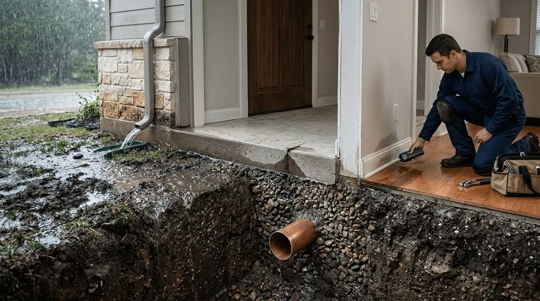
Can heavy rain cause slab leak?
Heavy rain does not usually break a pressurized pipe beneath a slab by itself. However, saturated soil and increased groundwater pressure can push water through cracks in the slab or foundation, creating moisture that looks like a plumbing leak. In Austin, Texas, professional leak detection can identify the water’s source before repairs are planned.
Can Heavy Rain Break a Pipe Beneath a Slab?
A slab leak occurs when a plumbing pipe beneath or within a concrete slab leaks. Heavy rain usually does not directly break that pipe. Plumbing lines carry water under pressure regardless of the weather, while rainfall affects the soil and groundwater outside the pipes.
That distinction matters when moisture appears after a storm. A wet floor or damp area near a foundation does not, by itself, show that a pipe has failed. The water could be coming from the plumbing system, or it could be entering from outside the home.
Rain can still be relevant to the investigation. When soil becomes saturated, water may collect around the foundation and find a path through an existing crack or opening. The timing of the moisture provides a clue, but identifying its source requires more than observing when it appeared.
Why Can Rainwater Look Like a Slab Leak?
As rain soaks into the ground, saturated soil can place pressure on the slab and foundation. This groundwater pressure, often called hydrostatic pressure, can push water through cracks or other openings. Once inside, the moisture may show up on a floor or along the edge of a room.
Those visible effects can resemble a slab leak. Both a leaking pipe and rain-related seepage may leave an area damp without an obvious source of water above it. If moisture appears beneath flooring, the point where it becomes visible may also differ from the point where water entered.
A common misconception is that water coming through a slab must mean a pipe underneath has broken. Concrete can admit groundwater through existing openings even when the plumbing is intact. Likewise, moisture that appears during rainy weather should not automatically be dismissed as seepage. The source needs to be established before anyone decides what to repair.
How Does Leak Detection Distinguish Plumbing Water From Seepage?
A plumber can assess the pattern of moisture and evaluate whether the plumbing system shows signs of a leak. The investigation may consider whether water appears only during or after rain, whether it persists during dry weather, and whether there are indications of water escaping from a pressurized line.
These observations work together. Moisture that follows rainfall may point toward groundwater entering through the slab or foundation. Water that continues to appear regardless of weather may raise different questions about the plumbing. Neither pattern is conclusive on its own.
Professional leak detection helps narrow down where the water is coming from before a repair plan is made. If a pipe is leaking, the work can focus on the affected plumbing. If groundwater is entering through a crack or opening, repairing an intact pipe would not address the moisture. Establishing the source first helps keep the response focused on the actual problem.
What Should Austin Homeowners Consider After Heavy Rain?
In Austin, Texas, a damp floor after a period of heavy rain can be concerning, especially when the moisture appears to come from below. The most useful first question is where the water originated. Its location and timing matter, but neither confirms a slab leak.
A homeowner may notice that a particular area becomes damp after storms and dries later. Another may see moisture that remains even when the weather changes. These are useful details to share with a professional because they help describe the pattern without assuming a cause.
For Austin, Texas, homeowners, professional leak detection can clarify whether plumbing water or rain-related seepage is involved. That finding provides a sound basis for deciding whether plumbing repair is needed or the moisture is entering through the slab or foundation.
FAQ
Does water on the floor after rain mean there is a slab leak?
No. Rainwater can enter through cracks or openings in a slab or foundation. Moisture after rain is a reason to investigate the source, not proof that a plumbing pipe is leaking.
Can a slab leak become visible during rainy weather?
Yes. A plumbing leak may be noticed during rainy weather, but the timing alone does not establish a connection. Leak detection can help determine whether the water is coming from a pipe.
What is hydrostatic pressure around a foundation?
Hydrostatic pressure is the force water places on a structure when it collects in surrounding soil. After heavy rain, that pressure can push groundwater through existing cracks or openings.
Why identify the water source before making repairs?
Plumbing leaks and groundwater seepage call for different repairs. Identifying the source helps ensure the planned work addresses the cause of the moisture rather than only where it appears.
Can heavy rain cause slab leak?
Heavy rain does not usually break a pressurized pipe by itself, but saturated soil and increased hydrostatic pressure can force groundwater through slab or foundation cracks and mimic a slab leak. In Austin, Texas, professional leak detection can distinguish plumbing water from rain-related seepage before repairs are planned.
Conclusion
Heavy rain does not usually cause a pressurized pipe beneath a slab to break. It can, however, saturate the soil and push groundwater through existing openings, producing moisture that resembles a slab leak. The water’s source must be identified before the right repair can be determined.
If you notice unexplained moisture after rain, PlumbPros can provide professional leak detection in Austin, Texas, to assess whether your plumbing is involved and help you understand the appropriate next step.