
What do plumbers use for leak detection?
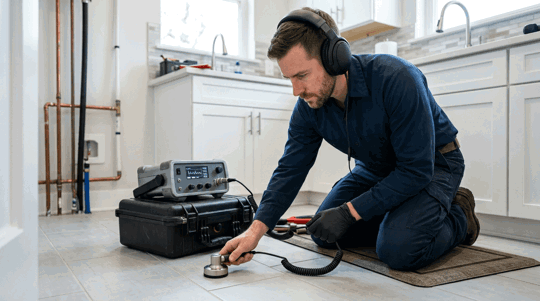
Plumbers use acoustic listening devices, moisture meters, pressure testing equipment, and thermal imaging cameras to help locate hidden plumbing leaks. In Austin, Texas, the appropriate leak detection method depends on the suspected location, pipe material, accessibility, and surrounding conditions. Technicians may combine several tools to narrow down the source accurately.
How Do Acoustic Listening Devices Find Plumbing Leaks?
Acoustic listening devices help plumbers detect sounds created when pressurized water escapes from a damaged pipe. Because these sounds may travel through piping, concrete, soil, or building materials, specialized equipment can amplify frequencies that are difficult to hear without assistance.
Plumbers may use ground microphones, listening discs, or electronic sensors to examine areas where a hidden leak is suspected. These tools can be particularly helpful when investigating water lines beneath slabs, behind walls, or below finished flooring.
The sound produced by a leak can vary according to several conditions, including:
The size and shape of the damaged area
The amount of water pressure in the pipe
The material and diameter of the pipe
The depth and location of the plumbing line
Nearby traffic, appliances, or mechanical equipment
Soil, flooring, and structural materials surrounding the pipe
An acoustic device does not always identify the exact source by itself. A plumber may compare sound intensity at several points and use other testing methods to confirm the likely location before recommending access or repair.
What Other Tools Do Plumbers Use for Leak Detection?
Hidden leaks do not all produce clear sounds. Plumbers often select additional equipment based on the signs present and the part of the plumbing system being evaluated.
Moisture Meters
A moisture meter measures moisture levels in materials such as drywall, wood, or flooring. It can help a plumber identify damp areas that may not yet show obvious staining or surface damage. Comparing readings across an area can also help trace how far moisture has spread.
However, a high reading confirms the presence of moisture rather than proving that a specific pipe is leaking. Condensation, previous water damage, roof intrusion, or another source may produce similar readings, so further evaluation may be necessary.
Pressure Testing Equipment
Pressure testing can help determine whether a section of the plumbing system is losing pressure. The plumber may isolate a line or fixture group and monitor the test equipment for a change. A pressure loss can indicate that water is escaping somewhere within the tested section.
This method is useful for narrowing the investigation, although it may not reveal the precise physical location of the damaged pipe. Acoustic equipment or another method may then be used to locate the problem more closely.
Thermal Imaging Cameras
Thermal imaging cameras display differences in surface temperature. Water moving behind a wall, beneath a floor, or across a ceiling may create a temperature pattern that differs from the surrounding area.
Thermal imaging is a screening tool rather than an image of the pipe itself. Temperature variations can have other causes, including insulation gaps, air movement, and heating or cooling equipment. Plumbers interpret these patterns alongside moisture readings and other evidence.
How Is the Right Leak Detection Method Selected?
There is no single tool that works equally well for every plumbing leak. The best method depends on where the leak may be located, what type of pipe is involved, and whether the line is pressurized.
A plumber may begin by reviewing visible evidence, such as damp materials, reduced water pressure, sounds of running water, or an unexplained change in water use. The technician can then inspect accessible fixtures, connections, valves, and exposed piping before testing concealed areas.
For example, acoustic equipment may be effective for a pressurized line beneath a slab, while a moisture meter may provide more useful initial information when staining appears on drywall. Pressure testing can help isolate the affected plumbing section, and thermal imaging may reveal where water has moved through surrounding materials.
Using multiple methods allows the plumber to compare findings and reduce unnecessary disruption. In other words, plumbers generally use the combination of tools most appropriate for the suspected leak rather than relying on one device for every situation.
Leak Detection for Austin, Texas, Properties
Homes and commercial properties in Austin, Texas, can contain plumbing systems made from different materials and installed through slabs, walls, ceilings, attics, or underground areas. These variations influence which leak detection equipment is likely to provide useful information.
A qualified plumber can evaluate the building layout, plumbing configuration, surface materials, and symptoms before selecting a testing approach. This targeted process helps distinguish a plumbing leak from condensation, drainage problems, or water entering from another source.
Myth: Every Plumbing Leak Can Be Found With a Thermal Camera
A thermal camera cannot directly see through walls or display leaking water inside a pipe. It detects surface temperature differences that may suggest moisture movement. Because other conditions can create similar patterns, thermal imaging findings usually need to be verified with moisture measurements, pressure testing, acoustic equipment, or a physical inspection.
FAQ
Can plumbers find a leak without opening a wall?
Plumbers can often narrow down a hidden leak using acoustic equipment, moisture meters, pressure tests, or thermal imaging before deciding whether an opening is necessary.
Are acoustic devices useful for every plumbing leak?
No. Acoustic equipment works best when escaping water produces a detectable sound. Small leaks, low-pressure lines, surrounding materials, or background noise may limit its effectiveness.
Can a moisture meter identify the exact leaking pipe?
A moisture meter identifies elevated moisture within building materials, but it does not identify a particular pipe by itself. Additional testing may be needed to confirm the source.
Why might a plumber use several leak detection tools?
Each tool provides different information. Combining sound, moisture, pressure, and temperature findings can help a plumber narrow the location and distinguish a plumbing leak from other moisture sources.
What do plumbers use for leak detection?
Plumbers use tools such as acoustic listening devices to hear water escaping from pipes, especially beneath slabs or behind walls. In Austin, Texas, they may also use moisture meters, pressure testing, or thermal imaging when appropriate. The best method depends on the suspected leak location, pipe material, and surrounding conditions.
Conclusion
Plumbers use acoustic listening devices, moisture meters, pressure testing equipment, thermal imaging cameras, and physical inspection to investigate leaks. The appropriate method depends on the pipe, suspected location, accessibility, and surrounding conditions.
If you suspect a concealed leak in Austin, Texas, PlumbPros can evaluate the plumbing system and select suitable leak detection methods based on the signs present. A professional inspection can help identify the source and determine the appropriate plumbing repair.