
Can a sump pit cause radon?
A sump pit does not create radon, but an uncovered or poorly sealed pit can provide a pathway for radon gas in the soil to enter a home. An airtight, radon-resistant cover may limit this entry route, but homeowners should still use radon testing and qualified mitigation when elevated levels are found.
How Can Radon Enter Through a Sump Pit?
Radon is a naturally occurring radioactive gas that can move from the soil beneath a home into its indoor air. The sump pit does not produce the gas. Instead, the opening may connect the home’s interior with soil, gravel, drainage tiles, or other spaces beneath the foundation.
Air pressure inside a house can be slightly lower than the pressure in the surrounding soil. This pressure difference may draw soil gases through openings in the foundation. An uncovered sump pit can become one of those openings, particularly when it connects to a perimeter drainage system.
Radon may also enter through other areas, including:
Cracks in foundation floors or walls
Gaps around plumbing penetrations
Construction joints
Floor drains
Crawl spaces with exposed soil
Openings around utility lines
Because a sump pit is only one possible entry route, sealing it should not be treated as proof that the entire radon problem has been resolved.
Does a Sump Pit Need an Airtight Cover?
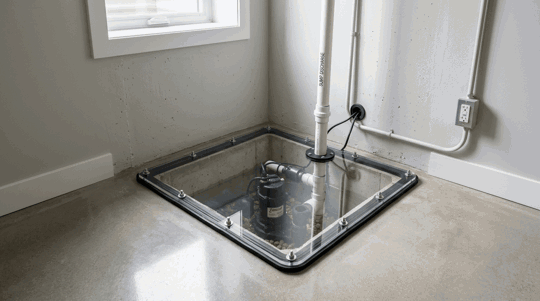
An airtight, radon-resistant sump cover can help reduce the movement of soil gas through the pit. A suitable cover generally seals securely around the pit while accommodating the discharge pipe, electrical wiring, and any other necessary connections.
The cover should also allow access when the sump pump needs inspection, maintenance, or replacement. A loose board, basic plastic lid, or cover with unsealed gaps may keep objects out of the pit, but it may not limit soil-gas movement effectively.
Sealing the sump pit can also support a professionally designed radon mitigation system. Depending on the home and test results, a qualified professional may incorporate the pit or the drainage system into a broader method for drawing radon from beneath the foundation and venting it safely outdoors.
Before altering the pit, homeowners should consider pump access, drainage performance, piping, electrical connections, and the need for a secure seal. The sump pump must remain functional after the cover is installed.
Why Is Radon Testing Still Necessary?
Installing a sealed cover does not reveal the home’s radon level. Testing is the only practical way to determine how much radon is present in the indoor air.
Testing may be completed with short-term or long-term methods, depending on the situation. Placement, timing, closed-building conditions, and device instructions can affect the usefulness of the results. Homeowners should follow the test manufacturer’s directions or work with a qualified radon professional.
Testing is important both before and after corrective work. An initial test helps identify whether elevated radon is present. Follow-up testing helps determine whether sealing or mitigation has reduced the level as intended. Radon levels may also change as building conditions, ventilation, weather, or foundation openings change.
If results indicate elevated radon, a qualified radon professional can evaluate the home as a complete system rather than assuming the sump pit is the only source.
How Does a Sump Pit Affect Austin Homes?
Homes in Austin, Texas, may have sump pits or drainage systems designed to manage groundwater and moisture around the foundation. When a pit is open or poorly sealed, it can create a direct connection between indoor air and the area beneath the slab.
A homeowner might notice that the pump works properly and assume the pit requires no further attention. However, water management and radon control are separate concerns. A working pump removes collected water, while a sealed cover helps restrict soil-gas entry. Neither function determines the home’s actual radon concentration.
For Austin homeowners, the appropriate approach is to keep the drainage system operational, seal potential entry points correctly, and test the indoor air. Elevated results may require a dedicated mitigation system designed for the home’s foundation and drainage configuration.
Common Misconception: A Sump Pump Removes Radon
A common misconception is that operating a sump pump removes radon along with groundwater. A sump pump is designed to move water, not collect or ventilate soil gas.
Even if the pump cycles regularly, radon may still enter through gaps around the pit, lid, discharge pipe, or nearby foundation openings. Likewise, installing a new pump does not address radon unless the surrounding pit is properly sealed and incorporated into an appropriate mitigation plan.
In other words, a sump pit can serve as a radon pathway, but the pump itself is not a radon-control device.
FAQ
Can covering a sump pit eliminate all radon in a home?
No. A sealed cover may reduce one entry route, but radon can enter through cracks, joints, drains, and other foundation openings. Testing is necessary to evaluate the overall result.
Can a regular sump pit lid block radon?
A standard lid may not be airtight. Radon-resistant covers are designed to seal the pit and openings around pipes or wiring while preserving access to the pump.
Should radon testing be completed after sealing a sump pit?
Yes. Follow-up testing helps determine whether the work reduced indoor radon levels or whether additional mitigation measures may be necessary.
Does a sump pump need to remain accessible under a sealed cover?
Yes. The cover should limit soil-gas entry while still allowing qualified personnel to inspect, maintain, repair, or replace the sump pump when needed.
Can a sump pit cause radon?
An uncovered or poorly sealed sump pit can provide a pathway for radon from the soil to enter a home. In Austin, Texas, an airtight, radon-resistant cover can help limit that entry route, but a sump pump does not replace radon testing or mitigation. Use a qualified radon professional when test results show elevated levels.
Conclusion
A sump pit does not generate radon, but an uncovered or poorly sealed pit can allow radon from beneath the foundation to enter a home. An airtight cover may restrict this pathway, although testing and professional mitigation remain important when elevated levels are detected.